Animadvent is an animated Advent calendar curated by Olivier Samter, Justine Klaiver and Amélie Cochet. Every day during Advent, a new clip by a Swiss animation talent is posted on its Instagram page.
In the 2023 issue, I was invited to animate a clip on December 9th.
Check it out on Instagram or watch it the final result below. Scroll down to read about the creative process.
The imagery
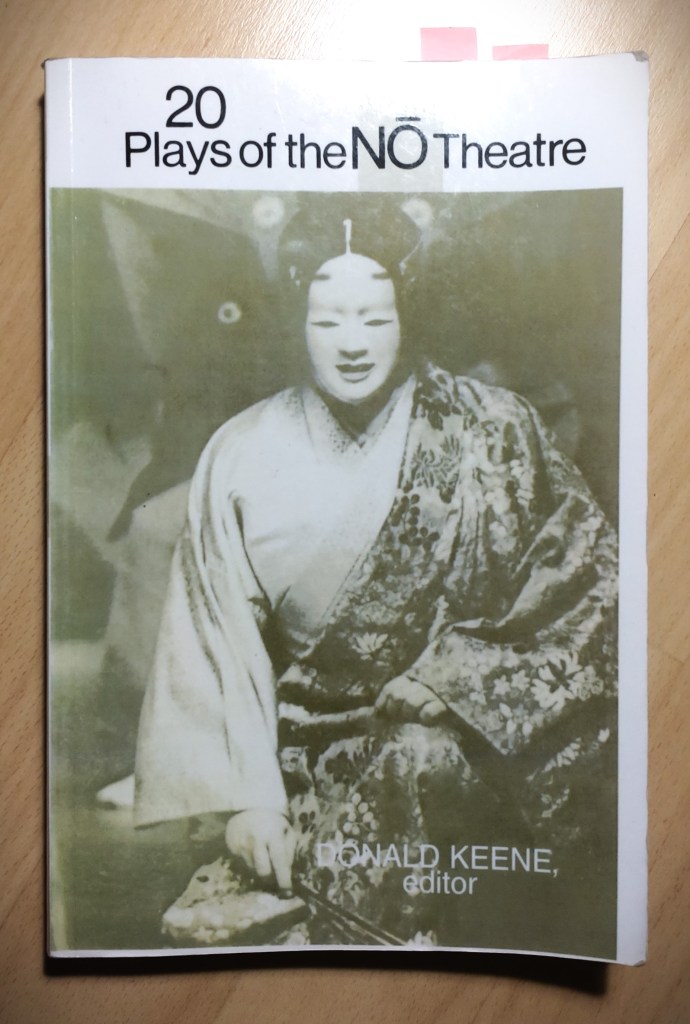
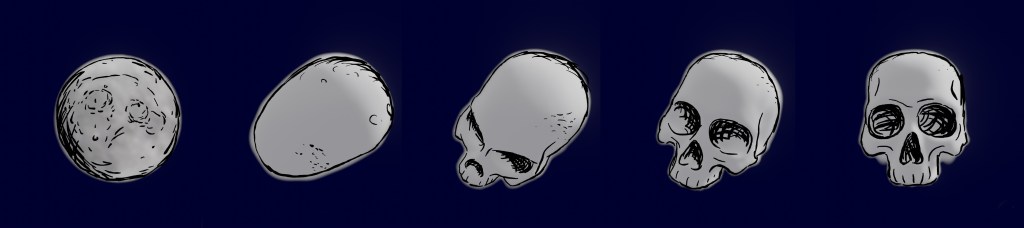
The clip was supposed to have a connection with winter or the Christmas season. I started reading Japanese No theatre plays, looking for scenes and symbol of winter. I found talking skulls of haunted ghosts and again and again the moon, a very strong Buddhist symbol. I wondered why the moon would create associations with winter, or a skull more so. One common trait is that their are white and fairly round. An other white and round object that can definitely be associated with winter is a snowball. I decided to bring these three symbols into a line of association, the snowball transforming into the moon the moon into the skull and the skull back into to snowball, creating a loop. The movement accompanying these images should be a rising, then hovering as if devying gravity, and falling again. Together, they should create an atmosphere of vanitas.
The poem
Such a short 3-part structure reminded me of a Japanese haiku, a poem structured in three lines with 5, 7, and 5 syllables. Writing a haiku comes with a whole philosophy, e.g. it should incorporate two seemingly not connected thoughts or images, triggering associations and contrast. But there’s also tanka, structured in 5 lines with 5, 7, 5, 7, and 7 syllables. Whereas the haiku usually has is rather light hearted, focussing on the impression of beauty and the creation of an atmosphere, the tanka adds two lines of humorous or sarcastic comments to the proceeding lines, usually by turning to or adding a new and surprising aspect.
Thus I wrote the lines:
しらたまや
よぞらに高く
みちひらき
はてなく続く
どくろのまいよ
Loosely translated:
The white orb
High above the night sky
Reveals a path
Endlessly repeating
The dance of the dead
The poem picks up the main images and symbols in the same order as in the animation. The 1st line refers to the snowball, contrasted with the moon in the next too. The last two lines pick up on the skull, adding the sudden twist.
Most of the lines have a double meaning though. “Shiratama”, the white orb, is actually a rather unusual reading of “shirotama”. But in this reading can also mean “knowing”. The “path” in line 3 can mean a spiritual revelation in Buddhist terms, correlating with the moon as a Buddhist symbol of enlightenment. “Hatenaku” in line 4 can mean endless, but “hate” also means border, limit. Limit of the mind and the physical world. “Dokuro no mai” in the last line literally means “dance of the skull”, referring to the literal skull seen in the image. In European tradition this would be referred to as “dance of the dead”.
Combining 3D and 2D objects
Since I wanted to use three-dimensionally complex objects like the skull and the moon with all its craters, I decided to use Blender and use actual 3D objects. 2D has the advantage, though, that the image gets distilled to few lines and if you choose the right lines, the image can get clearer and more impactful. Another factor was that it was easier for me to morph one object in to the next just using lines instead of having to morph actual 3D objects. On top of that, with animated holds (3 or more drawings of the same image in a loop), even still images can get induced with life.
Combining 3D and 2D objects is possible in Blender. Of course I could have used two applications and switch between them, but this way the 3D objects could inform the 2D drawings and they could inform the 3D objects and their animation in return, with me making any adjustments on any of them when it seemed necessary of more fitting.
After animating the main action with the 3D skull and moon, assessing the timing and length of the film, I copied them onto a 2D plane in front of them. Instead of filling the lines with a colour, I just left the 3D objects in the background with their colour and their texture. This freed the lines even more, because I didn’t have to painstakingly close any gaps between the lines or fill every small shape created through the hatching or double lines.
The following clip reveals from the build up in Blender an other angle:
Cinemas
The 2023 issue was also different because for the first time, the Animadvent clips were shown in four cinemas as supporting films ahead of the main programme. Cinemas that took part were Rex in Bern, Xenix in Zürich, Cinema Luna in Frauenfeld and Orient in Baden, where I also work as a regular projectionist and coordinated the Animadvent clips on this occasion.
 jotha
jotha 